Hapjeong <Lalabonguk>. If you want mala near Aroaro Hall, this is clearly one of the best choices. The xiang guo was better than the tang, and replacing the hot noodles with instant ramen makes it tastier. The egg fried rice is also remarkably good for this kind of place. For two people, this combination makes a satisfying meal.
Hapjeong <Gomitae>, first floor of Aroaro Hall. Kamo shio ramen. One dish only, no toppings or even extra noodles. Delicate plating, precise garnishes, noodles just slightly undercooked, refined soup retaining duck flavor, and aroma oil that is separate yet feels inseparable. A bowl marked by the owner's obsessive compulsion.
Hapjeong <Seogyo Nanmyeonbang>. Signature Seogyo nanmyeon. Nanmyeon means noodles kneaded with egg and wheat, with a texture somewhere among Korean noodles, pasta, and ramen. Broth blending Gu-eom chicken and Hanwoo, plus a range of carefully prepared tender garnishes, creates several distinct pleasures within one bowl. A very comforting, gentle bowl of warm noodles.
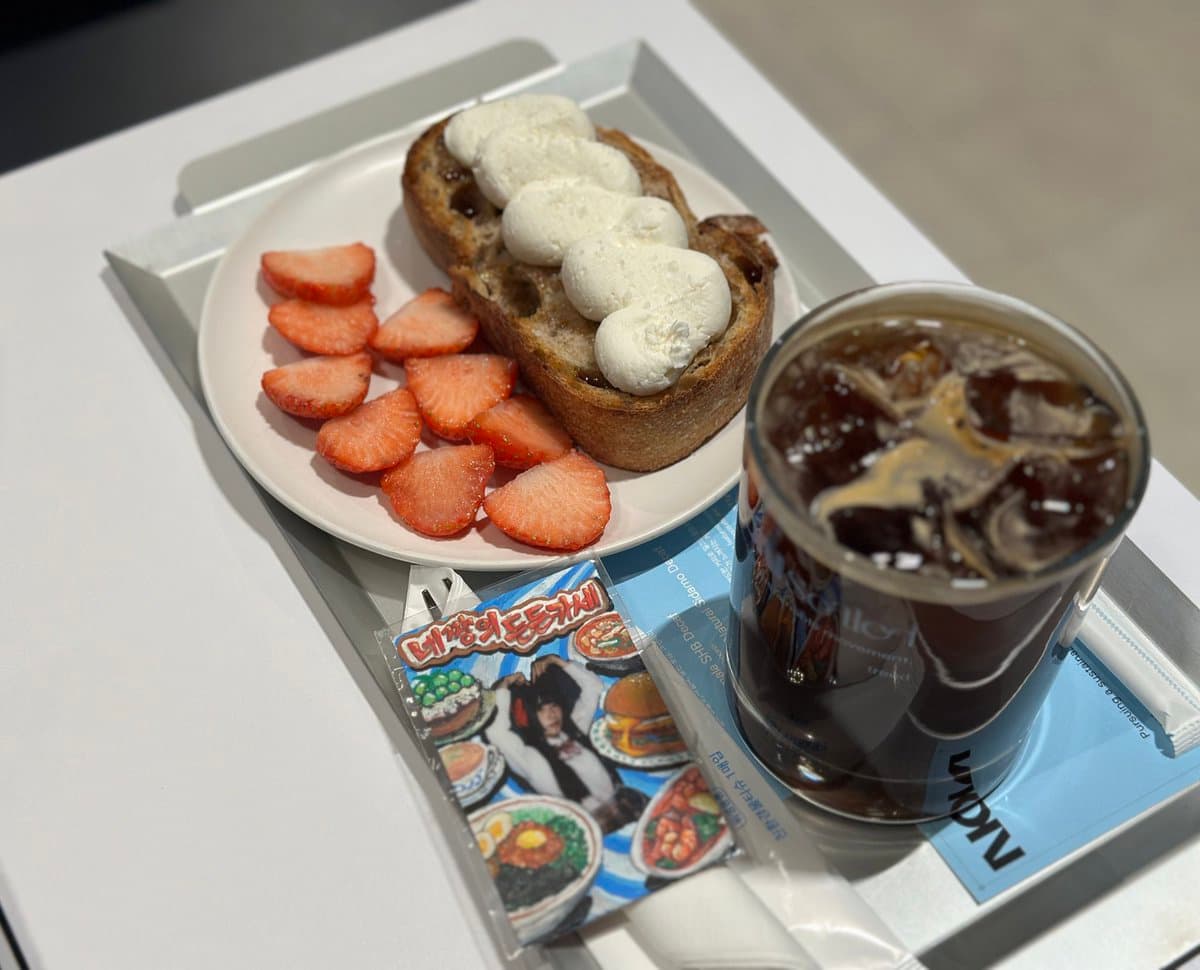
Near Aroaro Hall <Nonscaled>. A spacious, clean, composed, quiet, and stylish café. I ordered the semi-signature Cloud Toast and decaf coffee. It is not the kind of café where one can stay and work—the table structure prevents it—but it is excellent for a calm conversation. The sweet-and-salty toast was good.
Hapjeong <Eunkoshi Coffee House>. A bar-style shop with a barista whose hypnotic hand movements are worth watching as the coffee is prepared. The beans are in good condition, and the brewing skill is even better. The lighting, sound, and menu have all been considered with care, creating a space that lets you feel briefly separated from Seoul.
The kaisendon at Hapjeong <Kiyohan> is always satisfying. Its style is clearly conscious of Tokyo's <Tsujihan>, down to the sea-bream-broth ochazuke at the end, but it is genuinely delicious regardless. Passing nearby without eating here means losing half the day. The price is also reasonable for kaisendon.
Hapjeong <Camillo Lasagneria>. Signature Emiliana lasagna and fresh-pasta carbonara. I love this sense of abundance without heaviness. The sauce design is good: orthodox Italian cuisine itself. The portions may look small but are not, and make a sufficient meal. If a weekend lunch is this good, that is happiness.
Hapjeong <Quench Coffee>. Come here for coffee in which every part settles into a soft, seamless balance. I rarely order two coffees in one sitting, but I would have regretted missing the cappuccino. Coffee faithful to the fundamentals—more than simply foaming milk and placing it on top—is a pleasure to drink. The service is excellent too.
Mangwon <Manduran>. I had always wanted to say, “One of everything on the menu, please,” and today I finally did it—three adults can manage the amount. The dumplings, full of broth, are genuinely delicious. The wontons, dongpo pork, and cold noodles were all good too, making for a satisfying meal. The shop is too small for a large group, but I expect to think of it often.
Mangwon <Gawon>. The restaurant is famous for jjamppong, but my target from the beginning was mapo tofu noodles. It tastes like Korean-style mapo tofu without much mala, strengthened by roughly fifty percent overall, making the meal thoroughly enjoyable. The noodle portion is not small, yet plenty of tofu remains after mixing and finishing it. Do not panic; order rice.